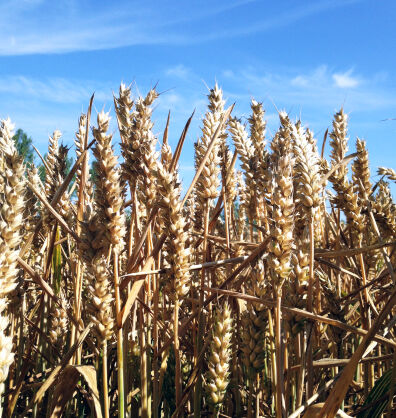
Wheat Harvest 2026: The Crop Beside Rapeseed
July 23, 2026
We’re known for our rapeseed – the crop behind our Mellow Yellow cold‑pressed oil – but our biggest crop is actually wheat. And now that we’re coming to the end of harvest, we’ve got some thoughts to share…
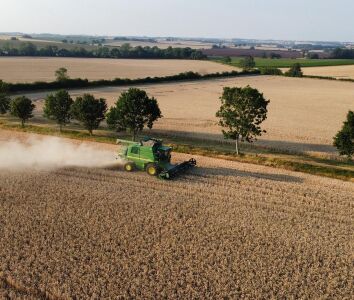
This year’s wheat harvest began in mid‑July, two to three weeks earlier than usual after five months of barely any rain and three intense heatwaves. Normally we’re stuck indoors waiting for thunderstorms to pass, but this year has felt more like Australia: dry and predictable.
A harvest shaped by heat
For once, we’re trying to preserve moisture in the crop rather than remove it. The wheat looked fantastic through winter and early spring, but once the rain stopped in March, we knew yields might suffer. You never truly know until the combine rolls in, and overall, our total yields will likely be 20% down.
A single storm on 26th May made a huge difference. Some fields caught 34mm of rain in an hour; others less than a couple of miles away got nothing. Those few millimetres now show clearly in the yield map. We farmers often talk about the weather – this is why!
.
A system that works for us
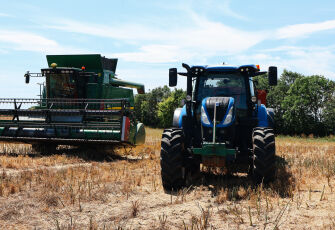
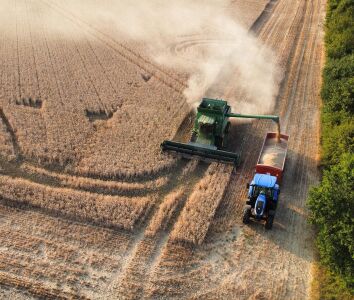
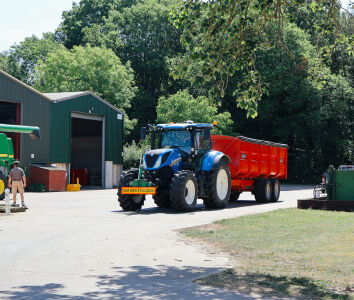
Despite the lower yields, the harvest itself has been easy. The combine is running well, we’ve hired an extra tractor to keep grain moving, and with no rain forecast, we’re working sensible hours. If all goes well, we’ll finish wheat by the end of this week before we get started on Spring Oats.
Our own grain store can’t hold all our wheat, so we work with Camgrain, the farmer‑owned cooperative in Kettering. As soon as our store fills, we’re loading lorries to move grain out again, all while keeping tractors and trailers running so the combine never stops. It’s a juggling act, but it works.
From Camgrain, our wheat heads to Northamptonshire’s mills and processors – the centre of UK flour, cereal, biscuit, and plant‑based drink production. It’s satisfying knowing our grain ends up in so many everyday foods.
The emotional side of Yield
Rapeseed yielded respectably this year, giving us hope. Beans were disappointing, as expected. Wheat began well in the first field, but as we moved across the farm, yields dropped (our farming neighbours were seeing the same kind of results).
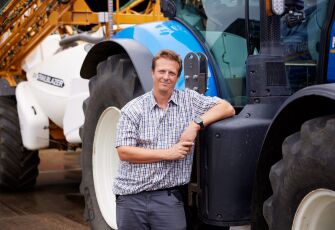
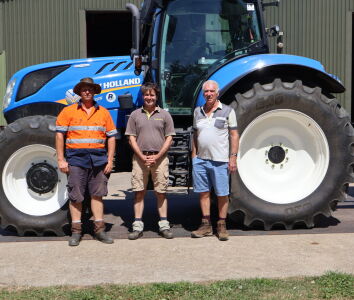
Stuart is taking it personally, as farmers often do. When you’ve done everything right, it’s hard not to feel responsible. But it’s simply the weather and where the rain fell.
On the bright side, the wheat is coming in dry, saving us the cost of running the grain dryer. Financially, lower yields hurt, but at least we’re spared that extra expense.
This is the third year in a row where extreme weather has shaped our harvest. What used to be exceptional, now somehow feels normal. We’ll keep adapting – because farming demands it.
Someone once told me that growing crops is like baking a cake: you can use the best ingredients and follow the perfect recipe, but imagine having no control over the oven. That’s farming. Every year, we work with that jeopardy, and every year, we start again with optimism.
When the sun is shining, the combine is running nicely, and dust is rising behind us, harvest feels like the culmination of the year’s work, it’s the moment every farmer lives for. Yes, yields are down. Yes, it’s frustrating. But next year always holds promise.
And that belief (misplaced or not) is what keeps us going.