Military Discipline to Culinary Fire
September 9, 2026
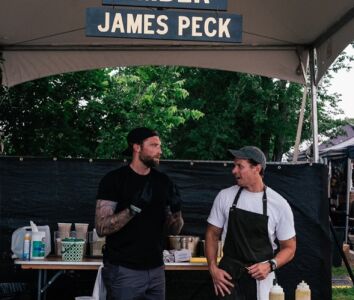
Chef, James Peck first earnt his stripes, not in the kitchen, but on the parade ground of the British Army.
That discipline formed the foundation of his creativity, and as a private chef for senior officers, James learned that food could be both art and service – a way to connect, to impress, and to care.
Where did your passion for food come from?
It all started in the military. I joined the army as a chef, and that’s where the spark really ignited. Cooking in that environment taught me about structure, teamwork, and the thrill of competition. I began entering military cooking contests – going head to head with the Navy and RAF – and discovered how much I loved the challenge. There was a rhythm to it: whether in the field kitchens, managing buffets, or hot starters, you were judged on precision and creativity.
That sense of discipline and pride shaped how I cook today. Later, working as a private chef for high ranking officers gave me the chance to refine my craft and understand the power of food to bring people together.
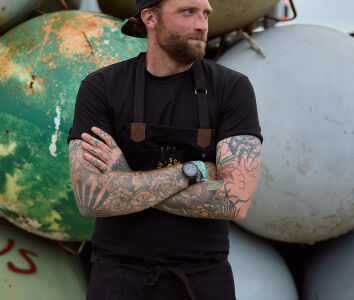
Was there a moment when you knew you wanted a career as a chef?
It wasn’t immediate. When you’re in the army, cooking is part of the job – you don’t necessarily see it as a lifelong path. But once I left, I started travelling and realised how universal food is. Every country, every culture, has its own way of expressing love and identity through cooking. That’s when it clicked: I could turn this into a career that I genuinely enjoyed. Travel opened my eyes to the possibilities beyond the regimented kitchens I’d known.
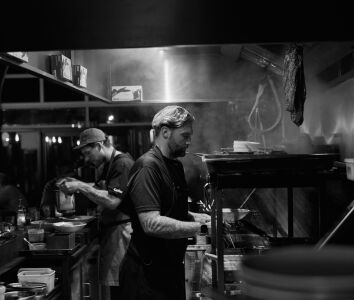
Which kitchens have helped shape your career most?
Working with Nathan Greene at The Sands End in Fulham was a turning point. He’s an ex two star Michelin chef, and he taught me to respect ingredients, to really understand their potential. You realise quickly that you know only a fraction of what there is to learn. Later, joining Jason Atherton’s Chef’s Brigade took me around the world, to Norway, San Sebastián, and beyond. Each place added a layer to my cooking.
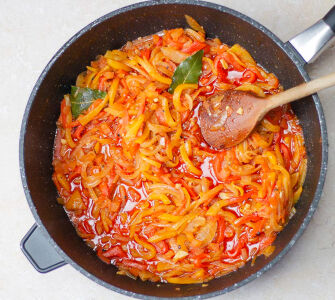
I remember making a Piperade Stew using Mellow Yellow rapeseed oil, and the Nonna said it was the best she’d ever tasted. That kind of feedback reminds you why you do it.
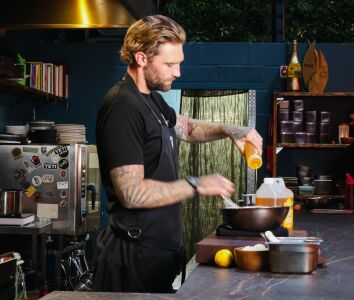
What do you enjoy most about kitchen life?
The unpredictability. No two days are ever the same. At Ember, I love the open kitchen – it lets me interact directly with diners, see their reactions, and share the story behind each dish. There’s something deeply satisfying about developing young chefs too, watching them grow and find their own rhythm. Cooking is about connection, between chef and ingredient, and between chef and guest.
How would you describe your cooking style?
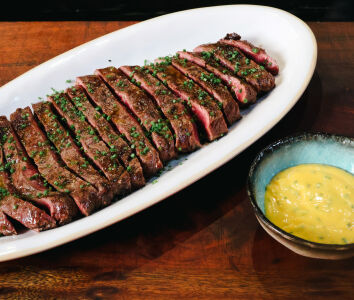
It’s evolved massively. In my twenties, I was all about proving myself with complex plates and technical flourishes. Now, in my late thirties, I’ve stripped it right back. My food is about fire, salt, and acid with honest flavours, cooked with confidence. I focus on celebrating the best ingredients and letting them speak for themselves. There’s nothing to prove anymore; it’s about mastery through simplicity.
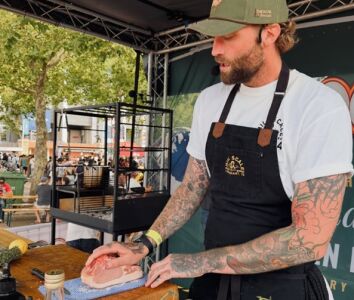
Is there a particular type of food you love?
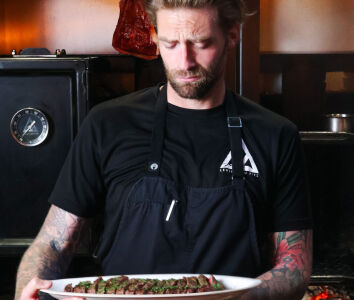
Anything cooked over an open fire. It’s primal, but also incredibly versatile. Fire is the backbone of so many cultures, from Japanese robata to Argentinian asado. I love how it allows me to blend influences. It’s about respecting the flame and using it to elevate ingredients rather than overpower them.
You use Mellow Yellow in your kitchen. What do you enjoy most about it?
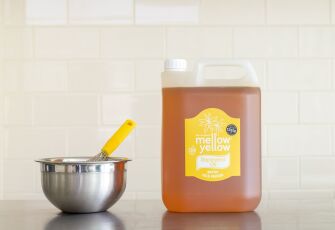
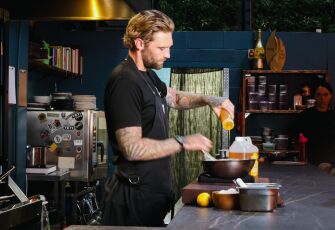
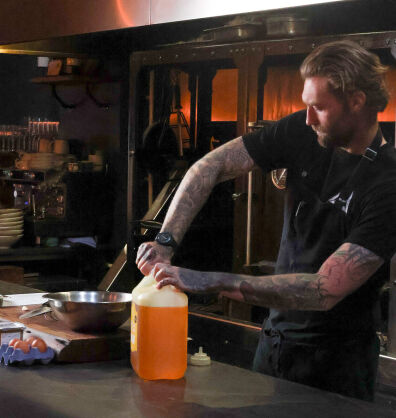
Its versatility. I can dress, emulsify, bake, or roast with it, all from one 5-litre container. It’s cost effective, sustainable, and doesn’t overpower the flavours I’m trying to highlight. It fits my ethos: simple, efficient, and respectful ingredients.
What ingredients do you most enjoy working with?
I’m obsessed with black garlic, it’s rich, earthy, and transforms beef dishes. I love root vegetables for their depth and sweetness, and shellfish for their delicacy. And of course, oil, especially Mellow Yellow cold pressed rapeseed oil. It’s the unsung hero in my kitchen.
What’s the best meal you’ve ever eaten and why?
Without question, Gareth Ward’s Ynyshir in Wales (a two Michelin star restaurant). Thirty eight courses of pure creativity. Every dish was a revelation, a masterclass in flavour and technique. It reminded me that food can be both art and emotion.
Is there a dining experience that changed the way you think about food?
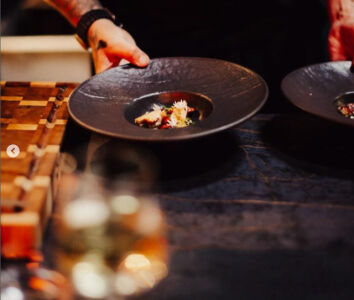
A one star restaurant in Léon called Atmosphere. It wasn’t about refinement, it was about honesty. They used only the best local ingredients: shellfish straight from the sea, vegetables from nearby farms. It was humble, simple, and beautiful. That experience taught me that great cooking doesn’t need to shout; it just needs to be sincere.
What three words would you use to describe yourself as a chef?
Passionate. Playful. Inspired. Those three words sum up everything I try to bring to the kitchen: energy, creativity, and a genuine love for what I do.
Outside of the kitchen, what do you enjoy doing?
I’m happiest outdoors, walking the dog, camping with my family, or heading off in my truck with the tent box on top. I’m a big Chelsea fan, and I love the gym. Anything that keeps me moving and grounded. Cooking can be intense, so being outside helps me reset.
What advice would you give to someone starting out as a chef today?
Find passion first. Don’t chase prestige, chase purpose. Research where you want to work and make sure the people there genuinely care about food. Eat at the places you admire before applying. Go in with no preconceptions. And remember: a pen and paper are more valuable than your first set of knives. Take notes, absorb everything, stay humble. And do as you’re told, even when it feels harsh, because that’s how you learn.